Crossing the Glacial Faults of Chilean Patagonia
Twelve days navigating the southern ice shelf where wind and granite define the final wild frontier of the Americas.
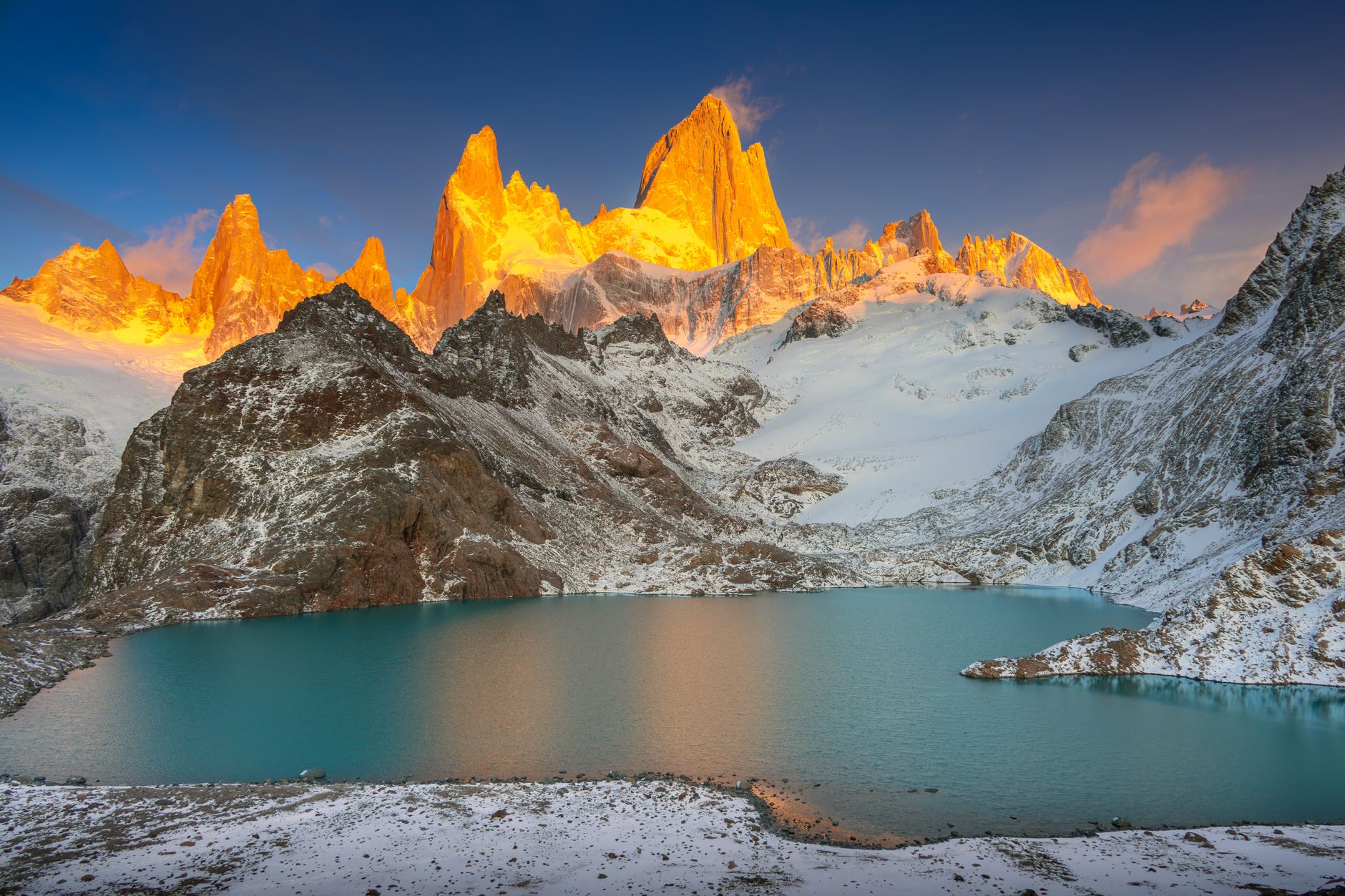
Patagonia is not merely a geographic province; it is a profound confrontation with natural scale. When your twin-engine propeller craft descends past the turbulent cloud cover over Puerto Natales, the geography below looks less like an inhabited planet and more like an unfinished volcanic draft.
1. The Continental Ice Cap
Covering nearly 17,000 square kilometers across the border of Chile and Argentina, the Southern Patagonian Ice Field represents the third largest accumulation of terrestrial ice on earth, surpassed only by Antarctica and Greenland. Standing upon the terminal moraine of the Grey Glacier, the scale defies camera lenses.
The ice is not white. Compressed over millennia under millions of tons of pressure, the oxygen bubbles have been expelled, yielding an intense, almost radioactive cobalt luminescence that absorbs all sunlight except the deepest blue wavelengths.
2. The Katabatic Winds
To travel through the French Valley is to reckon with the wind. The westerlies that whip unobstructed around Antarctica crash into the Andes, funneled through glacial canyons as violent katabatic downdrafts exceeding 140 kilometers per hour.
Walking against this force requires leaning forward at thirty-degree angles, using composite poles as anchors. Yet in this ferocious atmospheric friction lies an invigorating clarity. The sheer physical resistance strips away all mundane anxieties, reducing consciousness to rhythm, boot placement, and lung expansion.
“In Patagonia, civilization is reduced to an ephemeral dream; here the wind and basalt towers are the only permanent sovereign.”
3. The Estancia Legacy
Shelter in this severe wilderness has historically taken the form of isolated estancias — sprawling sheep stations established by Welsh, Scottish, and Croatian pioneers in the late nineteenth century. Today, a handful of these estates have been sensitively adapted to host naturalists and mountaineers.
Constructed from galvanized iron and thick lenga beechwood timber, they provide a deeply welcoming contrast to the howling elements outside: roaring iron stoves, wool blankets, and slow-roasted cordero al palo served alongside bold Carmenère wines from the Maipo Valley.
4. Expedition Logistics
Optimal traversal windows span December through early March. Technical crampons and foul-weather mountain shells are non-negotiable. We advise avoiding pre-packaged group trekking tours in favor of chartered private guides who can redirect routes based on micro-climatic patterns.
Commission an Extreme Expedition
Our expedition desk crafts tailored overland routes through Tierra del Fuego and the Southern Patagonian Ice Field with seasoned glaciologists.
Consult Patagonia Desk